Product Information
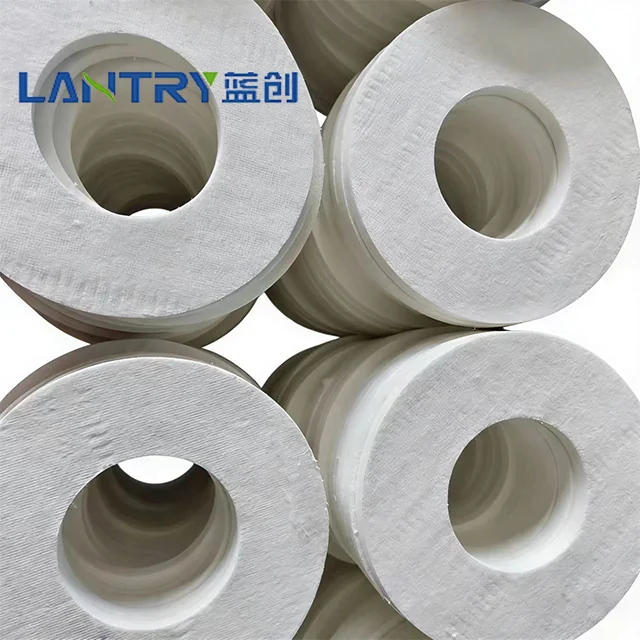
Ceramic Fiber Gasket
Ceramic fiber gaskets are flexible high-temperature seals made from ceramic fiber wool. They provide heat resistance, compressibility and recovery, low thermal conductivity and chemical stability.
Key Features
Standard grades are described as suitable for continuous use below 1,000°C. Higher grades, including zirconia-containing versions, have listed extreme temperature limits of 1,260°C–1,400°C.
Thermal stability and thermal-shock resistance accommodate rapid temperature changes.
Low thermal conductivity reduces heat loss and improves thermal efficiency.
Soft, flexible material is easy to cut and install, filling uneven flange surfaces.
The source describes resistance to most chemicals, electrical insulation, sound insulation and non-combustibility without smoke or odor at high temperatures.
Composition
Main constituents are alumina and silica; some grades add zirconia. Production uses vitreous-fiber or polycrystalline-fiber processes.
Applications
Furnaces, high-temperature piping and vessel insulation; furnace-door, valve and flange seals; fire doors and fire shutters; engine and instrument insulation; and high-temperature fire protection.
The source highlights smoke-control duct flange sealing and cites GB 50243-2006.
Types and Sizes
Types include ceramic fiber blanket, board and paper gaskets.
Typical thickness is 1.5–6 mm and common width is 1 m, with customization available.
Technical and Economic Features
The source states that the material does not soften or decompose above 600°C flue-gas temperature, does not burn in open flame and passes Class A non-combustibility testing.
It describes ready availability, moderate cost, easy installation and effective sealing for smoke-control duct flanges.